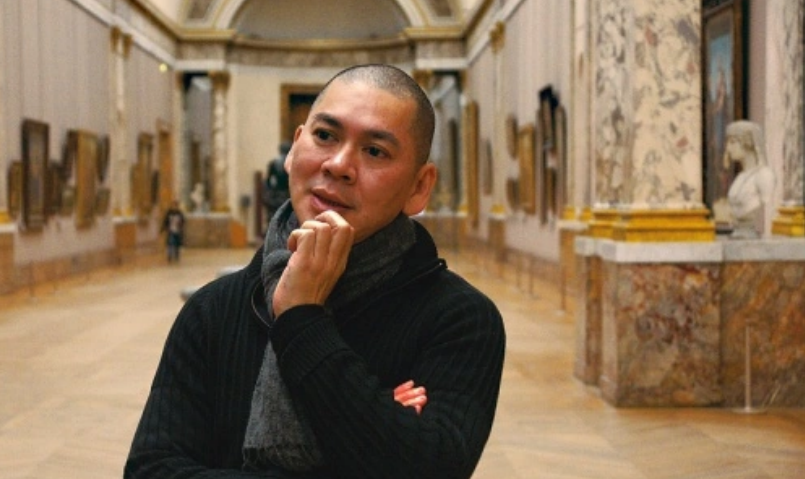
Tsai Ming-Liang
蔡明亮
- 分类: 艺术瑰宝
- ID: 1866806139122708481
Home CategoryArtsTsai Ming-LiangPlay4.5 minsTsai Ming-liang was born in Malaysia, is of Chinese descent and spent his first 20 years in Kuching, Sarawak, after which he moved to Taipei, Taiwan. Tsai is a celebrated film director known for his contributions to the second wave of Taiwan New Wave cinema movement. His films feature slow pacing, minimal dialogue, and long takes, exploring urban alienation and human connection, which have garnered international acclaim.ShareCatalogue1. Early Life and Background2. Career Beginnings3. Breakthrough and Notable Works4. Themes and Style5. Influence6. Later Works and Continuation
Early Life and Background
Tsai Ming-liang is a renowned film director born on October 27, 1957, in Kuching, Sarawak, Malaysia. He later moved to Taiwan, where he became a prominent figure in the second wave of Taiwan New Cinema. Tsai's work is characterized by its slow pace, minimal dialogue, and long takes, often exploring themes of urban alienation, longing, and human connection. His unique cinematic style has earned him a devoted following and critical acclaim worldwide.
Career Beginnings
Tsai Ming-liang studied film and drama in Taiwan, developing a passion for storytelling and visual arts. His career began in the television industry, where he directed several dramas. His transition to feature films was marked by a distinctive narrative style that diverged from conventional filmmaking. Tsai's first feature film, Rebels of the Neon God (1992), introduced his signature approach to cinema, with an emphasis on mood and atmosphere over plot-driven narratives.
Breakthrough and Notable Works
Tsai gained international recognition with his film Vive L’Amour (1994), which won the Golden Lion at the Venice Film Festival. This film established Tsai as a leading figure in contemporary cinema, known for his exploration of existential themes and human emotions. Another significant work, The River (1997), won the Silver Bear - Special Jury Prize at the Berlin International Film Festival. Tsai’s films often feature actor Lee Kang-sheng, who has become a central figure in Tsai's cinematic universe.
Most of Tsai's output in the 2010s was dedicated to his exhibition films, in particular the Walker series (2012–), the subject of which was a monk played by Lee who travels by walking slowly, usually surrounded by a busy background.
In 2020, Tsai released Days, which competed for the Golden Bear at the Berlinale film festival.
In 2021, Tsai released Wandering, a short installation film with no dialogue, which follows a woman visiting an exhibition of Tsai's Walker series in Taiwan.
Themes and Style
Tsai Ming-liang's films are notable for their exploration of solitude, urban despair, and the human condition. His minimalist approach often involves long, static shots and sparse dialogue, creating a contemplative experience for viewers. Tsai’s work frequently depicts the lives of marginalized individuals in modern society, using the urban landscape as a backdrop for personal and existential exploration. His films challenge conventional narrative structures, inviting audiences to engage with the emotional depth and visual poetry of his storytelling.
Influence
Tsai Ming-liang's impact on global cinema is substantial, influencing a generation of filmmakers with his unconventional storytelling techniques and thematic concerns. His work is celebrated for its artistic integrity and ability to evoke profound emotional responses. Tsai has been recognized with numerous awards and retrospectives, solidifying his status as an influential auteur in world cinema. His films continue to be studied and appreciated for their innovative approach to film form and their insightful commentary on contemporary life.
Later Works and Continuation
In recent years, Tsai has continued to push the boundaries of cinema with projects such as Stray Dogs (2013) and Journey to the West (2014), where he further explored his interest in the intersection of time, space, and human experience. Tsai’s dedication to his craft remains unwavering, as he continues to create films that challenge audiences and probe the depths of human emotion. Despite the evolving landscape of cinema, Tsai Ming-liang's work remains a testament to the power of film as an art form and a medium for profound introspection. Article reference1. Imagine a good way to grieve. chinadaily.com.cn. 2022Photo Gallery(1 picture)CategoriesArtsTagArtistsFilm and TVCatalogue1. Early Life and Background2. Career Beginnings3. Breakthrough and Notable Works4. Themes and Style5. Influence6. Later Works and Continuation- - - []








